New to EVs? Here's how home charging really compares to Supercharging
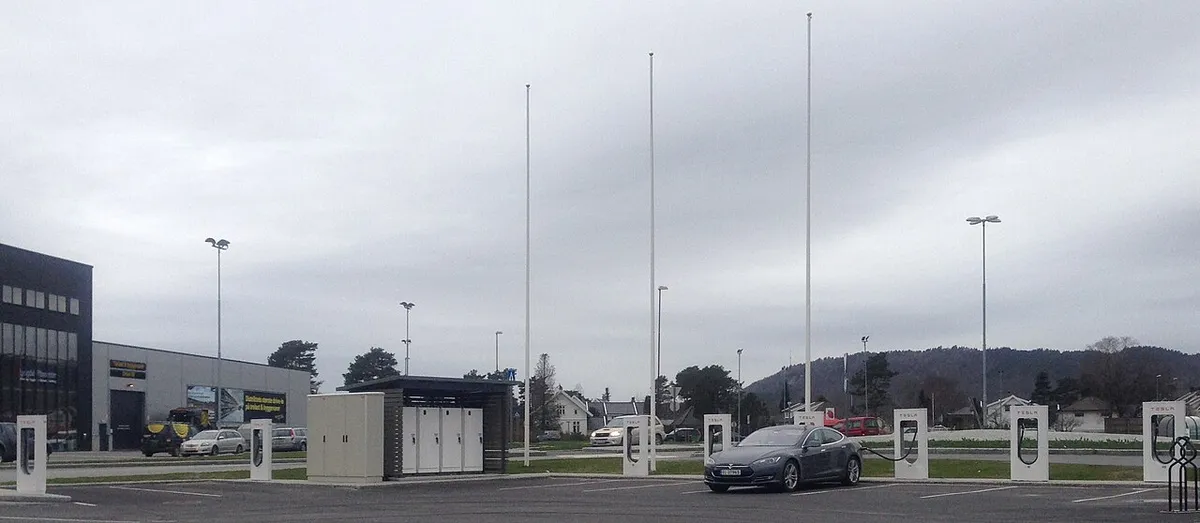
If this is your first EV, it's worth understanding one thing before delivery day: home charging and Supercharging are not interchangeable in cost, even though both charge the same car. Here's the beginner's version of the comparison — the concepts, not a made-up number.
Two very different ways to charge
- Home charging — usually overnight, on your domestic electricity tariff (some suppliers offer cheaper overnight EV tariffs). Slower, but usually the cheapest per kWh by a wide margin.
- Supercharging — fast, public, priced per site and sometimes per time of day (see what actually moves the Supercharging price →). Convenient for longer trips or when you can't charge at home, but rarely your cheapest option for everyday top-ups.
The comparison, done properly
Most people who compare the two just eyeball it. Do it properly instead:
- Work out your annual mileage and your car's real-world efficiency (mi/kWh, shown in the Tesla app).
- Divide annual mileage by efficiency to get your annual kWh.
- Decide roughly what share of that you'd realistically home-charge versus Supercharge (most owners home-charge the bulk of it and Supercharge only on trips).
- Multiply each share by its own live per-kWh rate — your electricity tariff for home, the Tesla app's live price for Supercharging.
Add the two totals together and you have a genuine annual estimate — built from your own numbers, not a borrowed headline figure.
The beginner mistake to avoid
New owners sometimes assume Supercharging will be their main charging method, because it's the most visible part of owning a Tesla. In practice, most owners do the majority of their charging at home overnight and treat Supercharging as the trip-and-top-up option — which is usually the cheaper way round.
None of this changes what your referral link is worth: 650 free Supercharging miles on a new Model 3 or Model Y, regardless of how you charge day to day. Full detail on that benefit: the real UK saving →.
The decision that beats both: which tariff you are on
Comparing home charging with Supercharging treats "home" as a single price. It is not, and for a UK household the gap between two home prices is usually larger than the gap between home and rapid charging.
A standard domestic rate and a dedicated overnight EV tariff are very different numbers for the identical kilowatt-hour going into the identical car. Which means the meaningful sequence for a new owner is not "home or Supercharger" but:
- Can you charge at home at all? A driveway or allocated parking with a socket answers most of the question.
- If yes, are you on an EV tariff? This is the step that moves real money, and it is usually a phone call or an online switch rather than an installation.
- Only then, how often will you Supercharge? Which is mostly about the trips you take, not about price.
Two practical caveats, because this is where guides tend to oversell. Off-peak EV tariffs generally need a smart meter and a supplier that offers one, so it is not universally available and worth checking before assuming it. And the cheap rate applies in a defined window, so the saving depends on charging inside it — usually trivial with a car that sits on a driveway overnight, and much less so if it does not.
Where the referral fits, honestly
Nowhere near the top, and it is worth saying so on a charging page in particular, because charging is where a Supercharging-miles benefit sounds most relevant.
Ranked by what they change over a few years of ownership: the tariff decision comes first, the ability to charge at home at all comes with it, how you drive comes next, and the referral's 650 free Supercharging miles come last — a one-off benefit against recurring costs.
There is one nuance worth keeping, though, and it runs the other way from the ranking. The people for whom the referral is worth most are precisely those for whom the tariff advice is worth least: drivers with no home charging, who buy all their energy at rapid-charging prices. For them the free miles displace expensive electricity rather than cheap, and are worth close to face value. If that is you, the order above inverts — and the sum in what 650 miles are worth is the one to run.