What 650 free Supercharging miles is really worth (GBP maths, 2026)
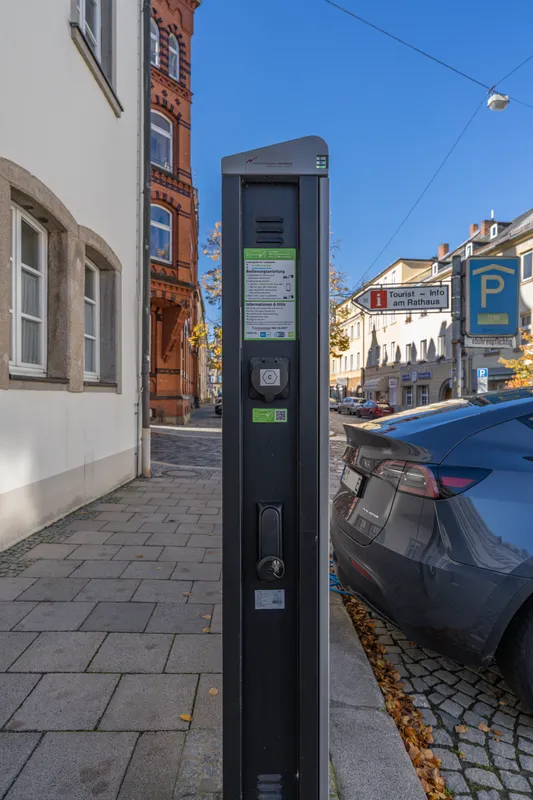
Other sites slap a single “£X” value on 650 free Supercharging miles. We won’t, because the real number depends on two things that vary: your car’s efficiency and the Supercharging price you’d otherwise pay. Here’s the honest way to work it out yourself.
The formula
Value ≈ (650 miles ÷ your mi/kWh) × your Supercharging price per kWh
A worked example (illustrative — plug in live numbers)
- Say a Model Y averages ~3.5 mi/kWh in mixed UK driving.
- 650 ÷ 3.5 ≈ 186 kWh of Supercharging covered.
- If UK Supercharging costs, say, £0.45/kWh at the time you check, that’s 186 × £0.45 ≈ ~£84.
Those input numbers are illustrative. Check your car’s real efficiency in the Tesla app and the live UK Supercharging price per kWh (it changes), then run the same sum for an accurate figure.
The real UK price bands — and why they make a single figure meaningless
The illustrative £0.45/kWh above is deliberately mid-range. The reason we won't commit to one number is that the actual spread in the UK is close to threefold, and it depends on decisions you've already made rather than on the reward itself.
| How you charge | Reported UK band | What 650 miles is then worth |
|---|---|---|
| Tesla driver, off-peak, with a Supercharger membership | from ~22p/kWh | ~£41 |
| Tesla driver, standard rate | ~40–50p/kWh | ~£74–£93 |
| Tesla driver, peak | up to ~60p/kWh | ~£111 |
| Non-Tesla EV using the network | ~63–65p/kWh | ~£117–£121 |
Same reward. Roughly £41 at one end and £121 at the other, on 186 kWh at 3.5 mi/kWh.
Read that table the right way round, because the intuition is backwards. The reward is worth most to the driver who charges expensively — peak-rate, on the road, without a membership — and least to the driver who has already optimised their charging. If you have a membership and charge off-peak, you've already bought yourself the saving the reward would have given you.
The counter-intuitive consequence for home chargers
If you mostly charge at home on a cheap overnight tariff, free Supercharging miles are worth considerably less to you than the table suggests — because the alternative you're avoiding isn't a 60p Supercharger, it's your own much cheaper electricity. The honest way to value it is against the price you'd actually have paid, not against the most expensive option available.
For a home charger who Superchargers only on occasional long trips, the useful question isn't "what are 650 miles worth?" but "will I even use 650 Supercharging miles before they expire?" If the answer is no, the value is whatever fraction you'll consume — and that's a smaller number than any site will print.
Don't forget the expiry when you do the sum
A value calculation that ignores the clock overstates the reward. Supercharging credit carries a validity window, and credit redeemed from a wider Tesla Credits balance into Supercharging miles typically runs on a shorter clock than the balance it came from. Two practical implications:
- Unused miles are worth zero, not "worth something later". Multiply your figure by the share you realistically expect to use.
- Don't convert credit into miles to "lock it in" if you rarely Supercharge. Converting a longer clock into a shorter one shortens the life of the value rather than protecting it.
How to get your own number in two minutes
- Your real efficiency: Tesla app → your car's energy screen, lifetime average in mi/kWh. Use that, not a review figure — mine and yours will differ by more than you'd expect.
- Your real price: the Tesla app shows the live per-kWh rate at the Superchargers you actually use, including any off-peak and membership pricing you're on. Take the one you'd realistically be paying.
- The sum: 650 ÷ your mi/kWh × your price per kWh.
- The honesty adjustment: multiply by the share of those miles you'll genuinely use before they expire.
That fourth step is the one every other page leaves out, and it's usually the biggest correction.
Miles, not FSD
Remember this benefit is Supercharging miles — UK buyers do not get a free FSD trial (not available to buy or trial in the UK as of July 2026 (VCA review; expected late 2026 / early 2027)). For the wider UK picture and eligible models, see the real UK saving →.