There's no fixed Supercharging price — here's what actually moves it
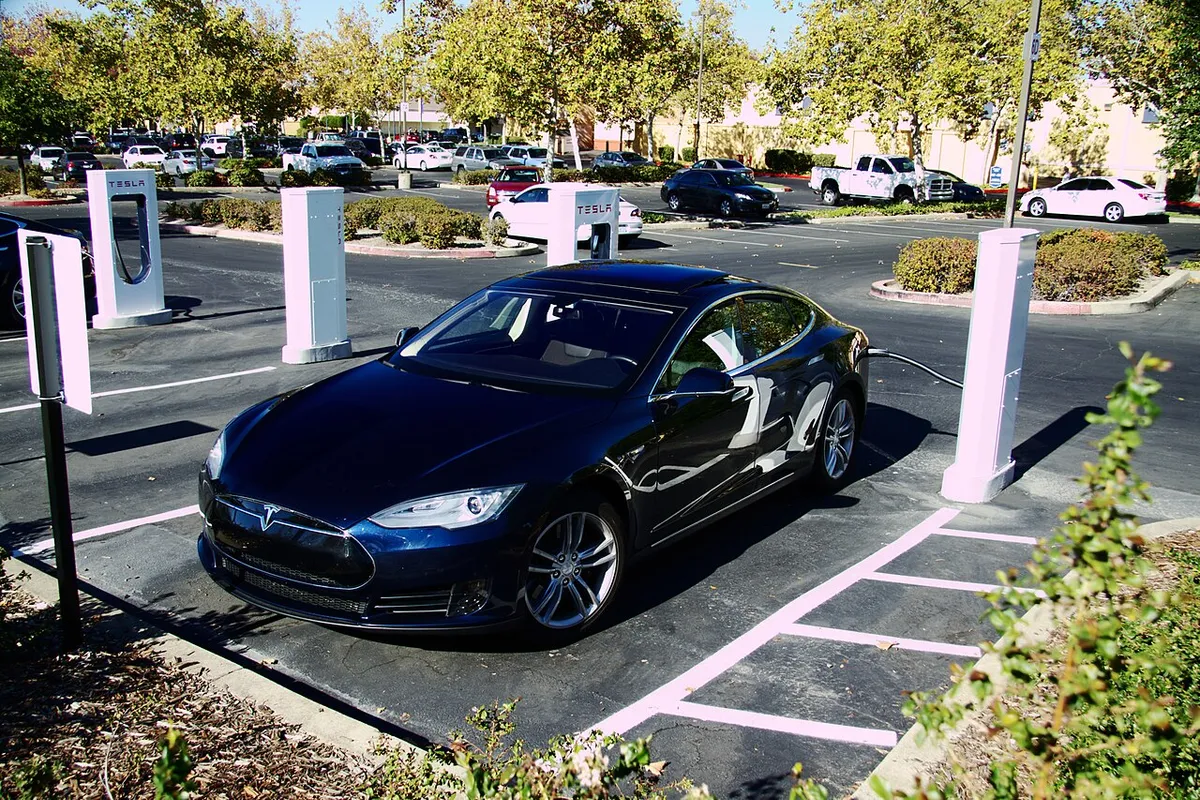
Ask ten people what Tesla Supercharging costs per kWh in the UK and you'll get ten different answers — and none of them are necessarily wrong. Tesla doesn't publish one national price. It prices each site individually, and at many sites that price can move through the day. Here's what's actually driving the number, and how to see today's real figure before you plug in.
Why there's no single UK Supercharging price
Tesla sets Supercharging pricing per location, not per country. A site next to a busy motorway service station is priced independently of a quieter site twenty miles away. On top of that, some sites price dynamically — so the same site can show a different number at 8am than it does at 6pm.
What actually moves the price
- The site itself. Location and typical demand at that specific Supercharger set its baseline.
- Time and demand. Where dynamic pricing applies, a full site at a busy hour can show a higher number than the same site late at night.
- Your membership status. Tesla-owned vehicles get member-tier pricing by default; non-Tesla EVs using the network typically pay a higher rate unless they've taken out a paid Supercharging membership — see what 650 miles is worth → for a different but related question.
The one number that matters: whatever the app shows you
Because the real figure moves, the only trustworthy number is the one on screen when you're about to plug in — either in the Tesla app's charging screen or on the stall itself. If you're planning a longer trip, checking a couple of alternative sites along the route before you set off can be worth the two minutes it takes.
Because the price moves, when you spend free miles decides what they're worth
Here's the consequence almost nobody draws from site-level, demand-aware pricing. Your 650 referral miles are denominated in miles, not money — so what they save you is whatever you would have paid for those miles. And that figure isn't fixed, because the price isn't fixed.
Spend the grant on expensive charging and it's worth more. Spend it on the cheapest charging you can find and you've converted a benefit into almost nothing. Which inverts the usual advice: normally you seek out cheap electricity, but a fixed mileage grant is the one case where you want it going through the expensive end of the range.
In practice that means:
- Use the free miles on the charging you can't avoid paying top rate for — the motorway-adjacent site on a Friday afternoon, the peak-hour top-up mid-journey. That's where a mile costs the most, so that's where a free mile saves the most.
- Pay cash for the cheap sessions. A quiet site late at night is the charging you least need a subsidy for.
- Don't hold the miles for a hypothetical perfect trip. Referral benefits carry an expiry, so an unspent grant eventually becomes worth exactly nothing — which is a bigger loss than spending it slightly suboptimally.
This is not a large sum of money and we're not going to pretend otherwise. It is, though, free to act on: the decision costs nothing beyond noticing which sessions to spend it on.
Is a cheaper site worth the detour? Do the sum
Once you accept that prices differ by site, the obvious next move is to drive to the cheaper one — and that's often wrong, because a detour is not free. The honest comparison has three terms, and only one of them shows on the app:
- The energy the detour itself consumes. A site fifteen miles off your route costs you thirty miles of driving, charged at whatever you end up paying. That's a real deduction from the saving, not a rounding error.
- The size of the session. A per-kWh saving scales with how much you're putting in. On a small top-up, even a large price gap amounts to very little; on a near-empty-to-80% charge, it's worth taking seriously. Multiply the gap by the kWh you actually need before deciding.
- Your own time, which no page can price for you but which is usually the term that settles it.
The practical version: check a couple of sites along the route before you leave, prefer a cheaper site that's already on your path over a cheaper site that isn't, and reserve the detour for a big session with a big gap. That's the whole method, and it works whatever the prices happen to be on the day.
Does any of this affect your referral miles?
No — and it's worth saying plainly. The 650 free Supercharging miles you get from a UK referral link are a fixed allowance of miles, not a fixed amount of money. What changes is how much those miles are worth in pounds, because that depends on the price per kWh at the time you use them. For the honest way to work that out, see the real UK saving →.