Tesla's Q2 2026: record deliveries, a 1.4% margin. Does that change when you should order?
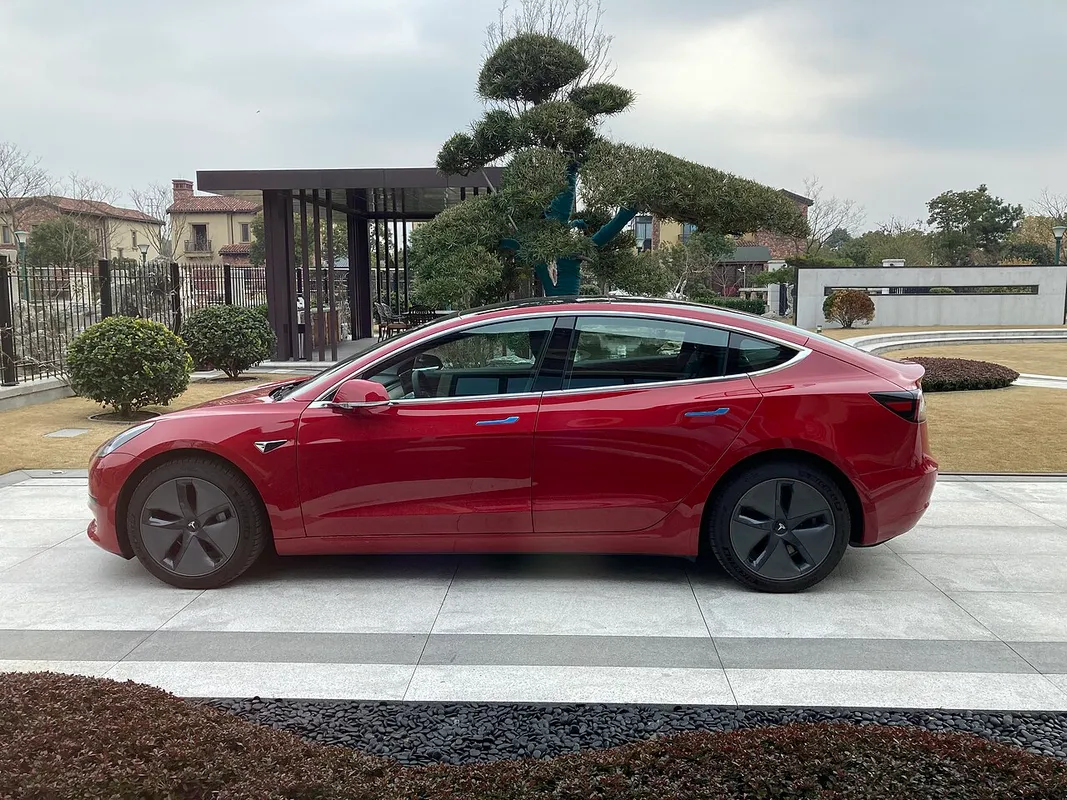
480,126 deliveries, its best-ever Q2, against a 1.4% operating margin and negative free cash flow. Strong volume, thin margin — here's what that combination actually tells a UK buyer.
Tesla delivered 480,126 vehicles in Q2 2026 — up 25% year over year, its best-ever second quarter, and the first year-on-year delivery growth in two years — having produced over 450,000. Revenue reached $28.24B, up 26%, though non-GAAP EPS of $0.33 missed the $0.51 expected; GAAP net income was $1.11B. The number that stands out most, though, is operating margin: 1.4%, down sharply. Automotive revenue was $20.52B (+23%), energy $3.14B (+13%), services $4.58B (+50%) — and capex jumped 142% to $5.79B, pushing free cash flow to -$1.09B, against +$1.44B in Q1 2026.
What the combination is actually telling you
Record volume with a thin margin is a specific signal: Tesla is selling more cars than ever, but keeping less of each sale, while also spending heavily (the capex jump) on future capacity. That's a company-level story about how Tesla is being run this quarter — it is not, on its own, a statement about UK pricing, referral terms, or order queues. Nothing in these figures touches the mechanics that actually govern your order: opening a referral link before you configure, or the 650-mile Supercharging benefit for a new Model 3 or Model Y.
One clarification, because the two numbers get bundled together
It's tempting to read the thin margin and the capex jump as one story — heavy spending squeezing profitability. Mechanically, they aren't the same story, and separating them makes both easier to read.
Operating margin is operating income divided by revenue. Capital expenditure doesn't go through it: money spent on factories and equipment is capitalised, then works through the income statement slowly as depreciation over the years the asset is used. So a 142% capex jump has almost no immediate effect on this quarter's operating margin. What squeezes an operating margin is what a company charges and what it costs to build and sell — pricing, discounting, and cost per unit.
Free cash flow is where capex lands immediately and in full. That's why the same quarter can show record revenue and negative free cash flow without any contradiction: the −$1.09B figure is largely a spending decision, not an operating failure.
The practical upshot for a reader: the 1.4% margin says something about the economics of selling a car right now; the −$1.09B says something about how much Tesla chose to invest. Treating them as one number overstates the distress in both directions, and it's the misreading most likely to turn into a confident prediction about UK prices.
Why consolidated figures can't tell you about UK pricing
Every figure above is global and consolidated, reported in dollars, blending every market, plus energy and services. UK prices are set for the UK, in sterling, and a consolidated margin has no line in it that corresponds to what a Model Y costs in Britain.
If you genuinely want UK-relevant signals rather than company-level ones, they exist and they're public:
- Tesla's own UK price list — the only authoritative statement of what you'd pay, and it changes without notice or announcement.
- Monthly UK registration data — the closest thing to a UK demand indicator, though it blends retail with fleet and lease volume, so read it as activity rather than as private demand.
- Tesla's UK refer-and-earn page — where a change to the 650-mile benefit would appear, ahead of any commentary about it.
None of those is an earnings line, and that's the point. A quarterly result is genuinely interesting if you hold the shares. If you're buying one car in one country, the three sources above will tell you more about your purchase than any margin figure ever will.
Does this change your order timing?
Not on the evidence here, and it's worth resisting the temptation to read a margin number as a coded signal about upcoming price cuts or incentive changes. A 1.4% operating margin and negative free cash flow tell you Tesla is under more financial pressure this quarter than last — they don't tell you what, if anything, Tesla will do about UK pricing or the referral programme as a result. If you're set on ordering, this is background context worth knowing, not a reason to rush or to wait for a move that hasn't been announced.
Background: the current UK referral benefit.
Sources
- Tesla Second Quarter 2026 Production, Deliveries and Deployments — Tesla IR
- Tesla (TSLA) Q2 2026 financial results — Electrek
- Tesla (TSLA) Q2 2026 earnings results — Teslarati
Checked against Tesla’s own en_gb pages on
5 August 2026. UK programme terms differ from the US and change
often — re-verify at
tesla.com/en_gb
before you rely on any figure here.